

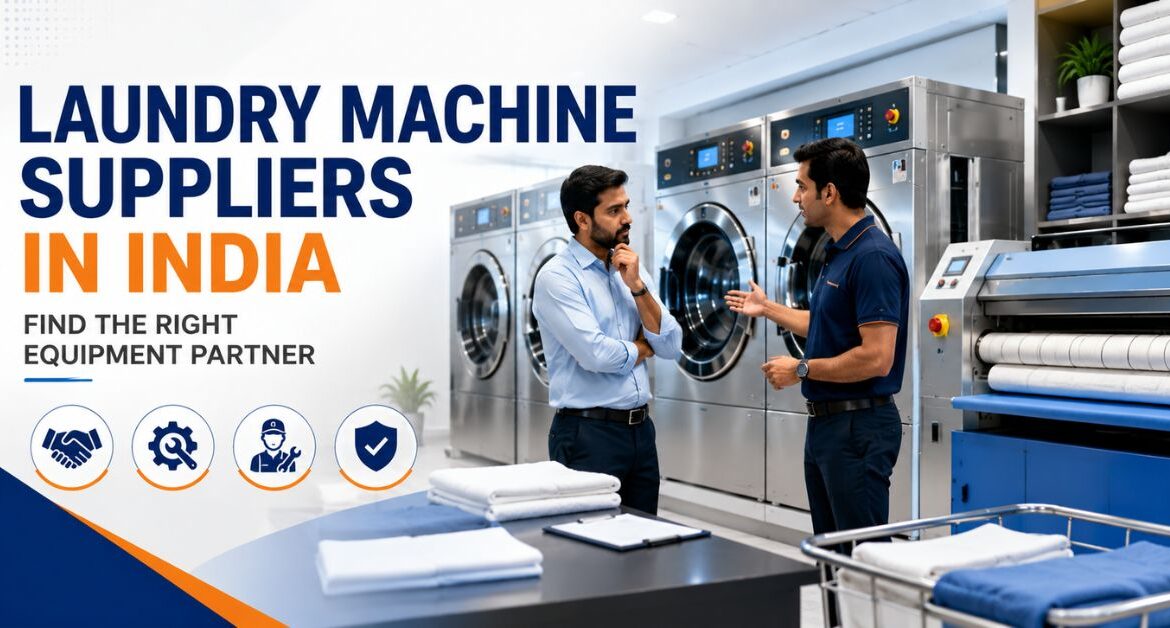
If you are opening up a laundry business in India, be it a small neighbourhood laundromat, a hotel linen service or large scale industrial laundry for hospitals/institutions, the equipment you buy is by far your most important business decision. Pick the right machines and they will serve you well for years. Choose poorly and you’ll be stuck with machines that break down constantly, cost you a fortune in repairs, don’t clean effectively, and drive your customers away.
And yet, many entrepreneurs entering the laundry business for the first time in India face a bewildering machine purchasing process armed with little more than second-hand information. Relying on advice from a single supplier, online price comparisons, or anecdotal recommendations from others who may not have even run an operational laundry themselves. They often end up buying a machine that’s too small for their needs, not suited for the water /electricity in their facility, or from an untrustworthy brand with no legitimate after-sales service in their area.
This guide will walk you through what you need to know about laundry machine suppliers in India. How the supply market is segmented, what different types of suppliers there are, what questions to ask before you buy, and what criteria you should use to decide if a supplier is a good long-term fit for your business.
How the Laundry Equipment Supply Market in India Is Structured
The laundry machine supply market in India operates across several tiers, and understanding these tiers helps buyers make more informed decisions about where and from whom to purchase.
Tier 1: Authorized Distributors of International Brands
Several global laundry equipment manufacturers, primarily from Germany, Italy, South Korea, the United States, and China, operate in India through authorized distribution networks. These distributors sell machines from brands known for their engineering quality and durability, and they typically offer installation support, operator training, and a manufacturer-backed warranty.
The key advantage of buying through an authorized distributor is the assurance of genuine parts and trained technicians. The primary drawback is the higher price point, which can be a barrier for small operators or those setting up their first commercial store on a limited budget.
Tier 2: Indian Manufacturers and OEM Producers
India has a growing base of domestic washing machine manufacturers producing commercial-grade equipment. Some of these are independent manufacturers with their own engineering and design capabilities. Others are OEM producers who assemble machines using imported components from China or Europe under their own brand label.
Indian-manufactured commercial laundry machines are typically more affordable than imported equivalents and benefit from wider local service availability. The variance in quality between manufacturers is significant, however, and buyers need to conduct due diligence beyond just inspecting the machine brochure.
Tier 3: Trading Companies and Multi-Brand Dealers
A large portion of commercial laundry equipment in India is sold through trading companies and multi-brand dealers who represent several manufacturers simultaneously. These dealers purchase in bulk and resell to end-users, often with financing options. They are typically not manufacturer-authorized and may not have dedicated technical staff on payroll.
While multi-brand dealers can offer competitive pricing and a wider product selection, buyers must verify whether post-sales service is handled in-house or outsourced, and whether spare parts are maintained locally or ordered on demand.
Tier 4: Second-Hand and Refurbished Equipment Vendors
The used commercial laundry equipment market in India is active, particularly in cities with established hospitality and healthcare sectors. Refurbished machines from closed hotels, hospitals undergoing equipment upgrades, or businesses that have scaled down are available through brokers and online marketplaces.
While the cost saving can be substantial, buying refurbished equipment without a technical inspection and service history is a significant operational risk. The cost of a machine that breaks down within months of purchase almost always exceeds the initial savings.
What to Evaluate When Comparing Laundry Machine Suppliers in India
The supplier relationship in the commercial laundry equipment space extends well beyond the initial transaction. Before committing to any supplier, evaluate them across these dimensions:
- Product Range and Capacity Options: A reliable supplier should offer machines across a range of capacities, from 10 kg entry-level commercial units to 30 kg or higher for large-scale operations. If a supplier pushes only one machine size regardless of your brief, that is a red flag.
- Technical Expertise and Pre-Sales Consultation: Can the supplier assess your space, water pressure, electrical load, and intended service mix before recommending a machine? Suppliers with technical staff on the ground offer significantly more value than pure sales-driven operations.
- After-Sales Service and Spare Parts Availability: Ask directly: where is the nearest service centre, what is the average response time for breakdown calls, and are spare parts maintained in local inventory or ordered from overseas? For commercial operations, machine downtime is lost revenue.
- Warranty Terms and Conditions: Read the warranty documentation carefully. Understand what is covered (parts, labour, travel), what voids the warranty (overloading, wrong detergent type, power surges), and whether the warranty is backed by the manufacturer or just the dealer.
- Installation and Commissioning Support: Commercial machines, particularly hard-mount front-loaders and washer-extractors, require professional installation. Confirm whether the supplier includes installation in the quoted price or charges separately, and whether they conduct a commissioning test after installation.
- References and Existing Customer Base: Request references from existing commercial laundry customers who purchased similar machines from the same supplier. Speaking to operators who have been using the machines for 1 to 2 years gives you insight that no brochure can provide.
- Financing and Payment Options: For capital-intensive purchases, ask whether the supplier has tie-ups with NBFCs or banks for equipment financing. Some suppliers also offer lease-to-own or rental models, which can reduce the upfront investment burden for new operators.
- Training for Operators: Commercial laundry machines require trained operators to maintain wash quality and machine health. Ask whether the supplier provides operator training as part of the purchase and what that training covers.
Types of Commercial Laundry Machines Supplied in India
Understanding the categories of machines available in the Indian market helps buyers match the right equipment to their specific operational requirements.
Front-Load Washer-Extractors
The most widely used commercial machine type in India for laundry stores, hotels, and hospitals. Available in capacities from 10 kg to 100 kg, these machines are designed for continuous use and deliver superior water extraction through high spin speeds, reducing dryer load and energy consumption.
Top-Load Commercial Washers
Less common in professional laundry operations but occasionally used for specific linen types. They offer shorter cycle times but consume more water than front-load equivalents and are generally not recommended for high-volume commercial use.
Tumble Dryers
Supplied in gas-fired and electric variants. Gas dryers are significantly more cost-efficient for high-volume operations but require a gas connection and appropriate ventilation. Electric dryers are easier to install but carry higher running costs per kilogram of laundry dried.
Steam Press and Finishing Equipment
Finishing equipment, including steam ironing stations, cabinet steamers, shirt finishing units, and flatwork ironers for hotel linen, is typically purchased alongside washing and drying equipment. Suppliers who offer a complete equipment package (wash, dry, finish) can often provide better system integration and unified after-sales support.
Chemical Dosing Systems
Automated chemical dosing systems are increasingly offered as add-ons by equipment suppliers in India. These systems connect to washing machines and dispense precise amounts of detergent, fabric softener, and other chemicals per cycle, eliminating human measurement error and reducing chemical waste.
The Regional Supplier Landscape Across India
Commercial laundry equipment suppliers are concentrated in specific industrial and commercial hubs across India. Understanding where supplier activity is concentrated helps buyers find credible options in or near their region.
- Mumbai and Pune: The western India corridor hosts several authorized distributors of European and South Korean laundry equipment brands, along with a strong base of domestic manufacturers.
- Delhi NCR: A major hub for multi-brand dealers and trading companies, with strong supply lines for both imported and Indian-manufactured commercial machines.
- Bengaluru and Chennai: Growing markets driven by the hospitality, IT park, and healthcare sectors. Several international brands have established direct distribution presence here.
- Kolkata: A traditional centre for commercial laundry operations in eastern India, with a mix of local manufacturers and dealers serving the hospitality and institutional sectors.
- Hyderabad and Ahmedabad: Emerging markets with increasing demand driven by hotel and residential sector growth, served primarily by dealers and regional distributors.
Buyers in smaller cities or Tier 2 and Tier 3 towns often have limited direct access to supplier showrooms and may need to work through regional dealers or arrange for equipment to be shipped from the nearest metro. In such cases, verifying the supplier’s ability to provide on-site service in your location becomes especially important before placing an order.
Common Mistakes Buyers Make When Sourcing Laundry Equipment in India
Many first-time commercial laundry buyers make avoidable errors during the equipment sourcing process. Being aware of these mistakes before you begin can save significant time and money:
- Choosing Based on Price Alone: The cheapest machine available is rarely the most cost-effective over a 5 to 7 year operational period. Factor in energy consumption, expected maintenance costs, and the cost of operational downtime when comparing options.
- Not Matching Machine Capacity to Projected Volume: Buying a 10 kg machine for a store projected to handle 50 kg of laundry per day creates an immediate operational bottleneck. Accurately estimate your daily volume before specifying capacity requirements.
- Ignoring Utility Infrastructure Requirements: Commercial front-loaders and dryers have specific electrical load and water pressure requirements. Buying a machine without verifying your premises can support it leads to expensive retrofitting or machine underperformance.
- Skipping the Site Visit: Always request a site visit from the supplier’s technical team before finalizing a purchase. This ensures the recommended machine is compatible with your floor layout, drainage setup, and electrical panel.
- Not Asking About Spare Parts Availability: For imported machines, enquire specifically whether critical spare parts (bearings, door seals, control boards) are stocked in India or need to be imported. Importing parts can take weeks and halt operations entirely.
- Overlooking the Supplier’s Service Track Record: A supplier may have a credible product line but poor service execution. Always ask how many technicians they have in your region and what their average response time is for breakdown calls.
- Purchasing Without a Written Service Agreement: Verbal commitments about service and support mean very little when a machine breaks down at a critical time. Insist on a written service level agreement (SLA) specifying response times and parts availability commitments.
How LaundroMentor Supports Laundry Business Owners in Navigating Equipment Decisions
One of the most frequently cited challenges among people starting laundry businesses in India is not knowing how to evaluate equipment suppliers objectively. Without industry experience or a professional network, it is difficult to distinguish credible suppliers from those offering substandard machines with convincing sales pitches. This is the gap that LaundroMentor is designed to address.
LaundroMentor is not a franchise model. It is a structured guidance and support platform built specifically for independent laundry business owners and aspiring entrepreneurs across India. The platform provides the kind of operational knowledge and systems that established laundry chains develop internally over years, and makes that knowledge accessible to small and unorganized laundry store owners who are building from scratch.
For anyone in the process of evaluating laundry machine suppliers in India, the resources and guidance available at laundromentor.com offer a practical starting point grounded in real operational experience.
Conclusion
The commercial laundry equipment market in India is large, varied, and, without the right knowledge, easy to navigate incorrectly. The suppliers you choose, the machines you invest in, and the service relationships you establish at the beginning of your business journey will shape your operational reality for years.
Taking the time to understand the supplier landscape, ask the right questions, verify service capability, and match equipment to your actual operational requirements is not just due diligence, it is the foundation of a laundry business that can sustain and grow. Avoid the common mistakes that cost early-stage operators money, and prioritize suppliers who demonstrate both product competence and long-term service commitment.
For those starting or structuring a laundry business in India without an established support network, accessing reliable, experience-based guidance before making equipment decisions can be the difference between a business that operates efficiently from day one and one that spends its first year firefighting.
Frequently Asked Questions
Is it better to buy imported or Indian-made commercial laundry machines?
Both have merit depending on your budget and operational requirements. Imported machines from established European or Korean brands typically offer higher build quality and longer operational life. Indian-manufactured machines are more affordable and often have better local service networks. The right choice depends on your volume, budget, and location.
What is the average cost of a commercial washing machine in India?
Entry-level commercial front-load washer-extractors (10 to 12 kg capacity) from Indian manufacturers typically range from ₹80,000 to ₹1,50,000. Imported commercial machines of similar capacity can range from ₹2,00,000 to ₹5,00,000 or more depending on the brand and specifications. Prices vary significantly by capacity, brand, and supplier.
What after-sales support should I expect from a commercial laundry equipment supplier?
At minimum, expect installation and commissioning support, operator training, a manufacturer warranty of at least one year, and access to a service technician within a defined response time for breakdown calls. Suppliers with local spare part inventory and dedicated technical staff are significantly more reliable than those who outsource service entirely.
Can LaundroMentor help me evaluate equipment suppliers for my laundry business?
Yes. LaundroMentor provides structured guidance for independent laundry business owners in India, including how to evaluate equipment, suppliers, and operational setups. It is not a franchise, it is a knowledge and support platform designed to help small laundry operators build professional, scalable businesses. Visit laundromentor.com for more details.


