

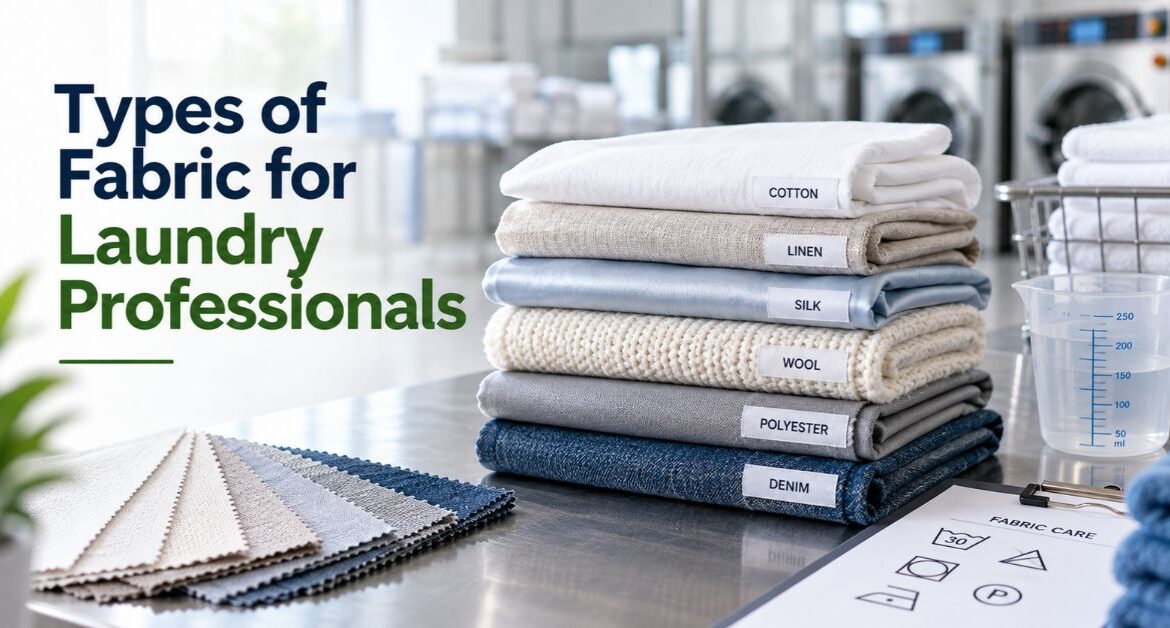
Two shiny sarees sit side by side on your laundry counter. They appear similar but one contains silk, and the other polyester. A wash programme suitable for cotton might ruin the other’s Colour, surface or shape.
Fabric for laundry isn’t just cotton or wool. Knowing your types of fabric means your team must inspect the care label, construction, lining and decoration before deciding on a process.
Once your team knows the material and route for care, it can easily select the correct detergent for laundry items with different fabric types.
In this complete guide to fabric for laundry professionals, we’ll cover the major fibre groups, handy identification tips, and connect the checks that run from receiving to washing, drying and finishing.
Fibre vs Fabric vs Finish: Know the Difference
Fibre is what yarn is made from; fabric construction explains how it’s formed. A finish changes the performance characteristics of the material, like softness, wrinkle resistance, or water repellency.
Why does this matter when sorting laundry? Let’s look at terms you might see on an order.
| Description on an order | What it tells you | What still needs checking |
|---|---|---|
| Cotton | Fibre content, if correctly identified | Knit or weave, colour, finish and complete garment care |
| Satin | A weave associated with a smooth, lustrous surface | Whether the fibre is silk, polyester or another material |
| Denim | A fabric construction commonly associated with jeans | Fibre blend, stretch, dye behaviour and decoration |
| Jersey | A knitted construction | Fibre content and shape stability |
| Microfibre | Very fine fibres | Composition, product purpose and care restrictions |
| Silk blend | Silk is one component | Other fibres, percentages and the finished item’s label |
Tip: While different fabrics for laundry may feel similar, fibres used to create them have distinct properties. Use the research tips below to verify your guesses.
How to Identify Fabrics Before Processing Laundry
Read the Composition and Care Labels
List the claimed fibre percentages and full care instructions. Take a photo of the label if that helps your production team read it later instead of guessing.
The composition spec can help you identify the material. The care label provides instructions for treating the finished product. A cotton jacket outer fabric does not make that garment suitable for your normal cotton wash programme.
GINETEX provides a good guide to professional care label symbols. The wash-temperature guide is represented by tub numbers with higher values for more heat. Bars inside the tub tell you if a gentle mechanical action is required. Dots indicate water temperature, and squares stand for dry cleaning methods. Carefully study all the instructions, not just the ones you expect to apply.
Use Appearance and Texture as Clues
Visually inspect the surface, drape, and yarn architecture in good lighting. Pull out a magnifier to help determine knits from woven yarns.
Look for pile, open weave, stretch panels, bonded layers or laminated areas. Note them down and compare them to the label. Try not to rely solely on touch to determine an exact fibre percentage.
If your findings conflict with the label, mark it down for review later. Don’t make an educated guess about something entered as facts on the order.
Inspect the Entire Garment
Look closely at the lining, shoulder pads, elastic waistbands, prints, metallic fibres, buttons, glued-on decorations or contrasting patch pockets. Document stains and existing damage before processing.
DLI has a handy checklist for their counter team members. Included are checks for tears, snags, damaged buttons, missing labels and colour fading. They also ask about spots and review the care label. Consider using these as basics to build your receiving process upon.
Review Unclear Labels With the Customer
Ask specific questions about where the garment was purchased, prior cleaning methods and if there was shrinkage or colour-transfer problems the first time. Manufacturers will have more detailed garment washing information if you can reach them.
Test a hidden area for colourfastness and treatment compatibility according to procedures developed by your laundry. If these successful spot checks pass, it does not mean the entire item can be washed, dried or pressed with those same settings.
Never perform burn tests on customer garments. They are destructive and can lead to misidentification because of blends or fabric finishes. When fibre identification is crucial to determining the process and remains unresolved, escalate to a person trained in performing assessments or contact a specialist textile laboratory. Do not put it into regular rotation.
Fabric Types for Laundry: Fibres and Care Priorities
The following is screening information. Fabric types for laundry that contradict the instructions on the finished product’s care label should not be processed using that method.
Tip: If your laundry washed items with no labels or unsure labels and they became damaged, do not assume it's that brand or fabric type again. Retest it to confirm your process works with that item.
1. Cotton
As probably the most processed fibre on the planet, cotton shows up on everything from t-shirts to towels to bed sheets and many daily-use garments. The way it feels and acts can change dramatically: a lightweight knit t-shirt needs very different washing and drying from a tightly woven pillowcase.
Check for colourfastness, previous shrinkage, printed designs or special finishes. If it’s a regularly received commercial linen item, get the supplier to send you their suggested processing recommendations and test a small load first.
2. Linen
This fabric comes from flax plants. You may find it in apparel or table linen. Fabrics-Store points out that linen is strong but will pill and wrinkle.
Natural linen and cotton fabrics often show yarn variation which can help you identify the fabric; however, this yarn appearance is not a definitive test to confirm fabric content.
Layfold gives extra attention to how linen folds, creating creases. Give linen the same careful handling, washing with gentle detergent and low-heat drying or lay drying to help reduce creasing. Air drying and pressing while it’s still damp works well for linen fabrics. Absorb what you read from a manufacturer, but don’t assume their washing instructions apply to all products. Use the garment label as your guideline.
3. Wool
Wool clothing should be washed with particular care around mechanical action and washing method. Don’t expect all wool items to be tagged as machine washable or professionally dry clean only.
Woolmark’s care symbols identify if a wool garment is machine washable vs hand wash and wheelchair accessible cleaning claims. Check the article of clothing’s instructions and use a wool washing programme if machine washing is allowed. Learn more about Woolmark’s washing instructions.
Pay attention to the chemicals you use too. Choose detergents specifically made for washing wool. Woolmark disagrees with using heavy-duty detergents, bleach or detergents containing enzymes, also known as “bio”.
4. Silk
Silk is a possible component of sarees, scarves, shirts, and special occasion clothes. One garment could contain polyester and Spandex with just a hint of silk. Just because something is shiny doesn’t mean it’s silk.
Focus on checking dye quality, surface embellishments and how it’s constructed. When it passes all those checks and washing is allowed, use a silk setting and products designed to clean silk. Control how silk garments are handled during drying and finishing too. Raising concerns early helps prevent damaging luxury fabrics.
Hint: The Fabric Store has strict washing instructions for its silk products. Bleach is never used, and they specify air drying, not tossing it into the tumble dryer. Learn why treating all silk garments “gently” is not enough advice.
5. Viscose & Traditional Rayon
Viscose can be confirmed by reading the label. Traditional rayon fabrics need extra support during washing as they will weaken when wet and could shrink or stretch out of shape.
If the garment label permits washing, help the item retain its shape and never pull it back through the drainage tube when wet.
6. Modal & Lyocell
These regenerated cellulose fibres can come from different trees or purified wood-pulp. That doesn’t mean all modal and Lyocell items can be washed the same way.
Review the components listed on the label, how the garment is constructed and follow the label. A rayon blend T-shirt made from knitted jersey will act differently than a woven dress.
ASKET’s guide to Lyocell includes caring for its clothes by following the garment label first and using gentle wash cycles. Asket’s suggestions apply only to their items, not every lyocell garment.
7. Polyester
Polyester uniform shirts, outdoor and performance clothing often contain polyester. That same fibre can be a heavy-duty canvas, smooth chiffon fabric or fuzzy fleece.
Look closely for stains before tossing it in the dryer. Confirm the recommended dryer settings and temperatures on the finishing cart too. Patagonia details how to wash its specific recycled polyester fleece product. Mild detergent and specific drying instructions are included. It’s one brand’s process, not every polyester fabric.
8. Nylon or Polyamide
Stretch swimwear, outdoor fabrics and active wear jackets could contain nylon. Technical textiles can include membrane laminates, coatings, spandex layers and bonded seams.
Courtesy of Patagonia comes instructions for washing its made-with-recycled nylon clothing line. Cool to warm water is allowed, and line drying or low-heat tumbling is recommended. Just because one company indicates their gear is safe, don’t assume it applies to every nylon fabric your laundry processes.
9. Acrylic
It’s easy to mistake acrylic sweater fabrics for wool. Print the care label, check for pilling, and avoid unforgiving heat when drying and pressing.
10. Acetate
Satiny acetate handbags and dress materials may look like silk. Find the heat specifications and spot-treatment products you can use: acetone dissolves acetate. Do not try nail polish remover on a questionable fabric.
11. Spandex, Lycra or Elastane Blends
Stretch sportswear, leggings and undergarments often contain Spandex. The small amount of elastane in a fabric still matters when determining the proper process.
Heat and bleach can damage Spandex fabric. Don’t assume because there is 97% cotton that you can use the hottest wash and drying cycle.
UGA Extension covers all of the rayon, acrylic, acetate, and Spandex warnings above.
Fabric Structures to Watch For
Laundry professionals should not rely solely on fibre knowledge. Take note of how that fibre is formed to identify what your staff should inspect closely.
| Fabric or construction | Receiving and processing checks |
|---|---|
| Satin | Inspect sheen and existing abrasion; assess rubbing and pressing sensitivity |
| Chiffon and georgette | Check fibre content, seams, snags and delicate decoration |
| Velvet and other pile fabrics | Record pile direction and existing flattening; assess finishing method |
| Lace and openwork | Inspect weak areas, attachments and snagging risks |
| Jersey and other knits | Record dimensions where needed; plan support during wet handling and drying |
| Denim | Check dye transfer, stretch content, leather patches and printed details |
| Towelling | Check composition, colour and the supplier’s intended laundering process |
| Microfibre cleaning textiles | Confirm product purpose and instructions for detergent, softener and drying |
Inspect these types of fabric for laundry closely. They each have unique properties that your team should know.
How to Process Blended Fabrics
Fabric blends combine characteristics. They do not let you take the average of two fibres and treat it as such.
Take a cotton and elastane blend T-shirt as an example. The elastane is usually only 3% of the total composition. That small amount will restrict bleach and temperature settings. A blend with wool also requires your team to consider the inner lining and how it’s constructed.
Use the finished garment as your guide and apply the strictest rules that apply to that item. If you know it can’t reach the required cleaning results and remain within those settings, escalate it to a manager. Don’t just turn up the heat or use more chemicals to make it work.
Hospital linens and other special-use fabrics may have the supplier’s recommendations. That info must pass your facility’s cleaning validations too. Just because your laundry can wash it, doesn’t mean it goes well in an antimicrobial cart or certifies it killed harmful bacteria.
Work Flow for Processing Types of Fabric for Laundry
Step 1: Create a Record of the Item and Its Present Condition
Capture the garment’s construction, fabric content, existing stains, damage and unknowns on paper. Take pictures of fragile embellishments or uncommon constructions if it will help later.
If it’s something that can easily distort or shrink, write down key dimensions so the person folding doesn’t have to guess.
Step 2: Sort the Items Into Processing Groups
Don’t sort laundry by Colour alone. Grouping the types of fabric for laundry by what chemistry, agitation, drying method and service requirements they have in common will save you time.
A cotton t-shirt and white microfiber kitchen towel are both white. That doesn’t mean you should wash them together.
Step 3: Plan Out Stain Removal
If you know what caused the stain or what’s been tried already, write it down. Find the proper product that works with both the fibre, dye and treatment restrictions. Follow the manufacturers instructions to care for clothes.
Do not treat a stain with the most aggressive stain remover just because you aren’t sure what the fabric is. When in doubt, document it and decide what to do next.
Step 4: Determine the Complete Process
Determine what equipment settings to use, temperature limits, chemicals, amount based on load size, extraction speed, drying method and finishing you can do. Revisit your machines instructions if they only allow you to choose between normal, delicate and heavy soil.
The time, temperature and ventilation are just as important to the final cleaning result. Match up what you know you can do to the cycles your equipment actually offers. Every brand has a different idea of what gentle means.
Step 5: Inspect Items Before Moving Them Onto Drying & Finishing
Stay on top of stains, colour bleeding, stretching and missing buttons. Evaluate abnormalities before they get tucked inside a pile on the finishing line.
Just because you can tumble dry it, doesn’t mean you can iron that temperature setting. Dry and finishing instructions are not the same.
Step 6: Perform a Quality Check on the Finished Piece
Does it look like the information you took in step 1? Are the seams still intact, Colour bright, and did you remember to pull out the twist ties? Double check measurements if you wrote them down.
Patterns happen. If the same shirt keeps twisting out of shape during drying, it might be time to ask why before washing another dozen.
Avoid These Fabric-Care Mistakes
Here are a few examples of shortcuts we don’t recommend.
- Treating shiny fabric as silk.
- Thinking you know what “bamboo” really means.
- Using bleach on every white fabric.
- Assuming you can boil wash everything just because it’s cotton.
- Setting the dryer to high just because you did not find the care label.
- Washing a stained garment just because you have the best stain fighter.
- Training lower-skilled staff to make these decisions and calling it a fabric care system.
Tell everyone on your laundry team the same thing: if you’re unsure of how to process an item, write it down!
Create a Fabric Identification System
Gather some sample fabrics. Ask the owner for permission if these swatches came from another brand or supplier.
Label each sample with its fibre content, material construction and where it came from. Avoid letting people add their handwriting later.
Next to that, create process cards for every customer and garment you process regularly. Record what machine programme was used, detergents and softeners, when it was last reviewed and by whom.
Present the fabric samples to new employees and explain how they can tell the differences. Show them the process cards so they know how repeatable your operations must be.
Neither replaces taking the time to read a new garment's instructions to care for clothing properly.
Curious how laundry machines and chemicals work together? Check out LaundroMentor’s guide to setting up laundry.
Final Thoughts on Types of Fabric for Laundry Professionals
Knowing the many fabric types for laundry helps your team ask the right questions before items hit the washing machine. Verify fibres where you can. Inspect the entire garment before choosing how to wash clothing. Follow through with those care instructions during drying and finishing too.
Begin by improving how you record information at the front counter. Informing the washroom and folding teams up front will set your entire facility up for better success.
Need more tips for laundry businesses? Follow us on Facebook for the latest news and discussions.
FAQ
2. Is satin the same material as silk?
No, satin is a weave that can be made from silk, polyester and many other fibre types. Just because fabric looks shiny doesn’t mean you can wash it the same way.
3. What temperature should I wash every fabric type?
There is no one temperature setting that works for every garment made from one fibre type. Consult the care label and confirm it matches your process guidelines, including agitation and chemicals.
4. How should my laundry handle a garment with no care label?
Stop processing and find out what you can about the fabric. Record the lost information, follow the remaining care instructions and refer it to a manager if you’re unsure.
5. Does the highest fibre % tell me how to wash a blend?
No. Sometimes the dye, percentages of two different fabrics or wash-care instructions from a lining or decorative panel restricts how you can process that item.
Evaluate the entire garment and wash according to its instructions.

Aman Sawaran is a leading laundry business consultant who has personally guided over a hundred laundromat owners to success. With years of hands-on experience in the laundry industry, Aman specializes in helping entrepreneurs build and scale profitable laundromats and pick-up & delivery laundry businesses. His step-by-step consulting program covers everything from selecting the ideal distributor and perfect location to securing financing and launching a state-of-the-art laundromat within just 3 to 6 months. Ready to transform your laundry business idea into a thriving venture? Aman can show you how to launch, scale, and maximize your profits with proven strategies and expert guidance.


