

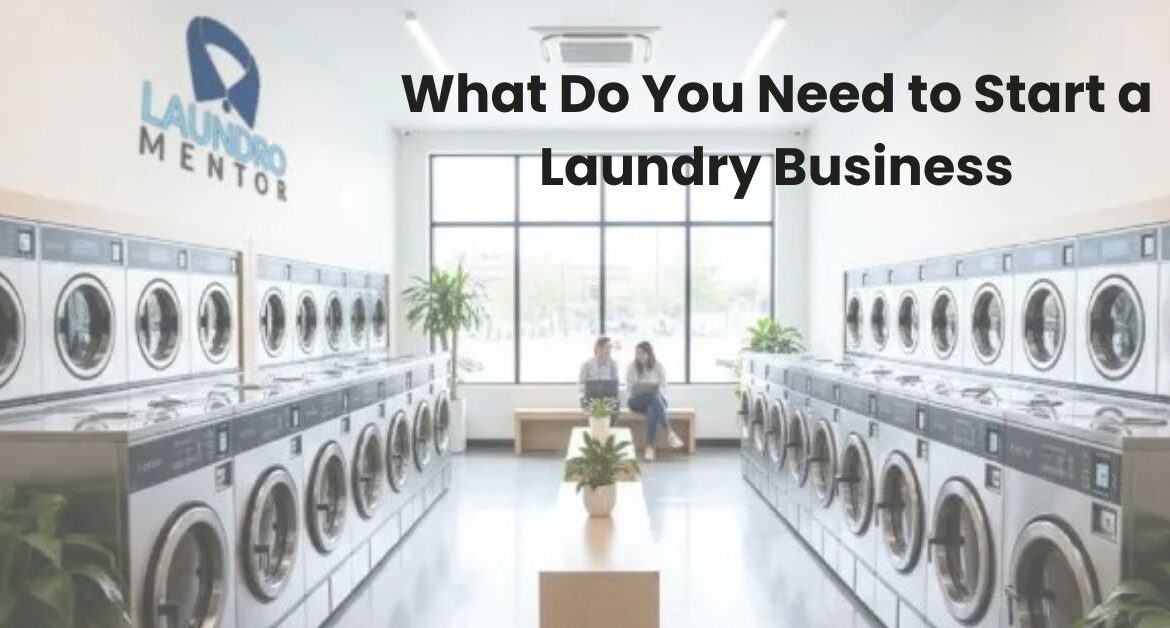
Starting a laundry business service is one of the most recession-proof businesses you can own. After all, folks will always require clean clothes and this simple need has created an enduring, profitable laundry service industry worldwide. If you plan to start a self-service laundromat, home laundry service with pickups and deliveries or even a commercial dry-clean only or full-service wash-fold operation, the start-up process is very similar.
Here, you will learn all the essential steps from start to finish so you can open your laundry service with confidence. We cover everything you truly need to know from equipment and financing to licensing and locations to long-term success.
Understanding the Laundry Business Landscape
Before investing a single rupee or dollar into equipment or real estate, you need to understand what kind of laundry business plan you want to operate. The industry is broader than most people realise, and each model comes with different startup costs, target customers, and operational demands.
The most common laundry business models include:
- Self-Service Laundromat: Coin-operated or card-operated machines where customers wash and dry their own clothes. Low labour costs, but high initial equipment investment.
- Wash and Fold or Drop-Off Service: You collect, wash, fold, and return clothing on behalf of customers. Popular in urban areas with busy professionals.
- Pickup and Delivery Laundry: A tech-driven model where customers schedule collections via app or phone. Highly scalable with low real estate requirements.
- Dry Cleaning Business: Specialised cleaning using chemical solvents for delicate garments. Requires specialised equipment and trained technicians.
- Commercial Laundry Service: Bulk laundry for hotels, hospitals, restaurants, and institutions. High-volume, contract-based, and consistent revenue.
Each model has a unique path to profitability, and your choice will shape every subsequent decision, from equipment purchases to staffing to marketing strategy. Spend time researching your local market demand before making this call.
Conducting Market Research and Feasibility Analysis
Market research is often skipped by eager entrepreneurs, and it is almost always a mistake. Your laundry business will only thrive if there is a genuine, underserved demand in the area you plan to serve.
Key questions to answer during your market research phase:
- Who are your target customers? (working professionals, students, families, corporate clients)
- How many competing laundry businesses already exist in your target area?
- What are those competitors charging, and are customers satisfied?
- Is there a gap, perhaps in delivery services, express turnaround, or premium garment care?
A simple feasibility analysis that covers startup costs, projected monthly revenue, and break-even timeline will save you from costly surprises. This does not need to be a formal MBA-level report, a well-thought-out spreadsheet that accounts for rent, equipment EMIs, staff salaries, utilities, and expected customer volume is sufficient for most small to medium setups.
Creating a Solid Laundry Business Plan
A business plan is your roadmap. It keeps you focused, helps you secure funding if needed, and forces you to think critically about operations before spending money.
Your laundry business plan should include:
- Executive Summary: A brief overview of your business concept, target market, and financial goals.
- Business Model Description: The type of laundry service you will offer and your unique value proposition.
- Market Analysis: Findings from your research, including competitor analysis and customer demographics.
- Operational Plan: Daily workflow, staffing, turnaround times, quality control measures.
- Financial Projections: Month-by-month revenue and expense forecasts for the first 12 to 24 months.
- Marketing Strategy: How you will attract and retain customers, both online and offline.
Equipment You Will Need to Start a Laundry Business
Equipment is typically your largest startup expense. Choosing the right machines for your business model is critical, both for quality of service and long-term cost efficiency.
Essential Equipment for Most Laundry Setups:
- Commercial Washing Machines: Front-load commercial washers with high spin efficiency reduce drying time and energy costs. Choose machines rated for continuous daily use, not domestic-grade appliances.
- Commercial Dryers: Tumble dryers with large drum capacity paired to your washer load size. Gas dryers are often more cost-efficient than electric in high-volume settings.
- Steam Ironing System or Steam Press: For wash-and-fold or garment finishing services, professional ironing equipment makes a significant difference in presentation quality.
- Garment Conveyor or Racking System: Keeps finished garments organised, reduces errors in order fulfilment, and speeds up dispatch.
- Folding Tables and Sorting Bins: Ergonomic workstations designed for high-volume folding reduce staff fatigue and improve throughput.
- Water Softening System: Hard water damages machines and affects wash quality. A water softener is a small upfront investment that extends machine life significantly.
- Point of Sale (POS) System: A simple billing and order management system to track orders, manage payments, and generate customer receipts.
- Delivery Bags and Packaging Supplies: Branded poly bags, hangers, and garment tags reinforce your professionalism and make a strong impression at delivery.
Location, Space, and Infrastructure Requirements
Location strategy varies by business model. A self-service laundromat needs high foot traffic, near apartment complexes, hostels, or college areas. A pickup-and-delivery service needs only a processing hub, which can be a modest back-street space with lower rent.
Whatever your model, your space must support:
- Adequate electrical load capacity (commercial washers and dryers draw significant power).
- Proper plumbing with sufficient water pressure and drainage.
- Ventilation to manage heat and steam from dryers.
- Enough floor area for equipment, staff movement, and customer interaction.
- Storage for chemicals, detergents, and finished orders awaiting pickup.
Before signing any lease, have a structural and electrical assessment done. Many laundry businesses have faced costly renovations because the space looked ideal but could not handle the power and water demands of commercial equipment.
Licenses, Permits, and Legal Registration
Operating legally is non-negotiable. The exact requirements vary by country, state, and municipality, but here is a general checklist of what most laundry businesses need:
- Business Registration: Register as a sole proprietorship, partnership, LLP, or private limited company depending on your scale and future plans.
- GST Registration (India): Mandatory once your turnover crosses the threshold. Even below the threshold, voluntary registration is often beneficial.
- Shop and Establishment License: Required in most Indian states for any commercial premises.
- Fire Safety NOC: For premises above a certain size, a No Objection Certificate from the fire department is required.
- Trade License: Issued by the local municipal body, confirms you are permitted to run a commercial operation at that address.
- Pollution Control Board Consent: If you are using dry-cleaning chemicals, you may need consent to operate from the local Pollution Control Board.
Staffing and Training Your Team
Your staff are the backbone of your laundry operation. Even with excellent equipment and a good location, poor staff performance will drive customers away quickly.
For a small to mid-sized laundry business, your core team typically includes:
- A counter executive or customer service person to manage order intake, customer interactions, and billing
- A washer and sorter responsible for pre-treatment, machine operations, and sorting
- A presser and folder who handles finishing, quality checks, and packaging
- A delivery person if you offer pickup and delivery services
Invest in proper training from the start. Staff should know how to read fabric care labels, identify stain types, handle delicate garments, and communicate professionally with customers. A well-trained team reduces garment damage complaints, builds customer trust, and improves operational efficiency.
Pricing Strategy for a Laundry Business
Pricing your services correctly is one of the most common challenges for new laundry business owners. Price too low and you erode your margins, price too high and you lose customers to competitors.
A practical pricing strategy involves calculating your cost per kilogram of laundry, factoring in water, electricity, detergent, labour, and overheads, then applying a margin that keeps you competitive while generating sustainable profit in the laundry business .
Consider offering:
- Tiered pricing (standard, express, premium)
- Service packages (weekly subscriptions, monthly plans)
- Loyalty discounts to increase customer retention
Transparent pricing displayed clearly, on your counter, website, and WhatsApp business profile, builds trust and reduces pricing friction at the point of sale.
How LaundroMentor Supports Laundry Entrepreneurs
Starting a laundry business independently can feel overwhelming, especially navigating equipment choices, pricing models, quality standards, and customer acquisition all at once. This is precisely the gap that LaundroMentor was created to address.
LaundroMentor is not a franchise. It is a structured mentorship, knowledge, and support system built specifically for people who want to start or improve their own laundry setups. This distinction is important, you retain full ownership and independence, while gaining access to the systems, processes, and operational frameworks typically used by organised chain laundries.
LaundroMentor focuses particularly on helping small and unorganised store owners across India bridge the gap between informal operations and professional, systemised businesses. Through their guides, tools, and support, laundry entrepreneurs can implement quality controls, standard operating procedures, pricing frameworks, and customer management practices without needing prior industry experience.
Marketing Your Laundry Business Effectively
Even the best-run laundry operation needs customers, and getting those customers requires a deliberate marketing approach.
What works consistently for laundry businesses:
- Local SEO and Google Business Profile: Claim and optimise your Google Business listing with your address, phone number, photos, and services.
- WhatsApp Business: Use it for order updates, promotions, and customer support.
- Referral Incentives: Encourage satisfied customers to refer friends by offering a discount on their next order.
- Hyperlocal Social Media: Post regularly on Instagram and Facebook showing your process, before-and-after results, and customer testimonials.
- Flyers and Partnerships: Distribute leaflets in nearby residential societies and partner with nearby businesses.
Consistency in marketing, even in small, regular doses, builds visibility over time and compounds into a steady customer base.
Technology and Software Tools to Run a Modern Laundry Business
Even small laundry businesses benefit enormously from using the right software tools. Technology reduces errors, improves customer experience, and gives you data to make informed decisions.
Useful categories include:
- Laundry management software for order tracking, billing, and customer records
- Online booking systems for scheduling pickups
- Accounting software for tracking income, expenses, and compliance
- CRM tools for managing customer preferences
- Delivery management apps for route tracking
Estimated Startup Costs for a Laundry Business in India
Startup costs vary significantly by model, city, and scale.
- Commercial washing machines (2 to 4 units): INR 80,000 to INR 4,00,000
- Dryers: INR 60,000 to INR 3,00,000
- Steam ironing or pressing equipment: INR 20,000 to INR 1,00,000
- Shop rental deposit and setup: INR 1,00,000 to INR 3,00,000
- Legal registrations and licenses: INR 10,000 to INR 30,000
- Initial detergent and chemical stock: INR 10,000 to INR 25,000
- Working capital for first 3 months: INR 1,50,000 to INR 3,00,000
A realistic total investment range for a professionally set up small laundry business is approximately INR 5 lakh to INR 15 lakh.
Final Thoughts: Starting Smart, Not Just Fast
Opening a laundry can absolutely be done by newbie entrepreneurs that have never worked in the industry before. You just need to do your homework, know what equipment to buy, understand the laws that you need to follow, have your pricing figured out and be ready to provide great service from day one.
Too many people fail because they try to cut corners rushing into business. Successful laundries take the time to learn how things work. They put their systems in place ahead of time. And they remain diligent even when business starts booming.
LaundroMentor Industrial Laundry is here to help provide structure for the self-directed individuals who are doing their own research. If you’re looking to own a laundry without the restrictions and fees of a franchise, we have the knowledge, tools, and support you need to build a professional, systemised business.
There’s room for quality laundries that care about their customers. Plan well and start your laundry right.
Frequently Asked Questions
Q1. How much does it cost to start a small laundry business in India?
A small, professionally set up laundry business in India typically requires an investment of INR 5 lakh to INR 15 lakh, covering commercial equipment, shop setup, licenses, initial stock, and working capital. Costs vary based on location, machine brand, and business model.
Q2. Is a laundry business profitable?
Yes, a well-run laundry business can be highly profitable. Net margins typically range between 20% and 40% once operations are streamlined, customer volume is stable, and utility costs are managed efficiently. Profitability depends heavily on location, pricing strategy, and service consistency.
Q3. Do I need prior experience to start a laundry business?
No prior experience is required, but structured learning is highly recommended. Understanding fabric care, machine operation, chemical handling, and customer service will help you deliver quality from day one. Mentorship platforms like LaundroMentor are designed specifically to equip beginners with the knowledge and systems they need.
Q4. What licenses are required to start a laundry business in India?
The basic requirements include business registration, a trade license from the local municipal authority, a shop and establishment license, and GST registration. Depending on the services offered and premises size, you may also need a fire safety NOC and, for dry-cleaning operations, consent from the State Pollution Control Board.
Q5. What is the difference between a laundry franchise and independent ownership with mentorship support?
A franchise requires you to operate under someone else’s brand, pay ongoing franchise fees, and follow their operating model. Independent ownership with mentorship support, such as what LaundroMentor offers, means you own and operate your business under your own identity, while benefiting from external guidance, operational systems, and knowledge frameworks. You get the support without the financial and operational constraints of a franchise.


