
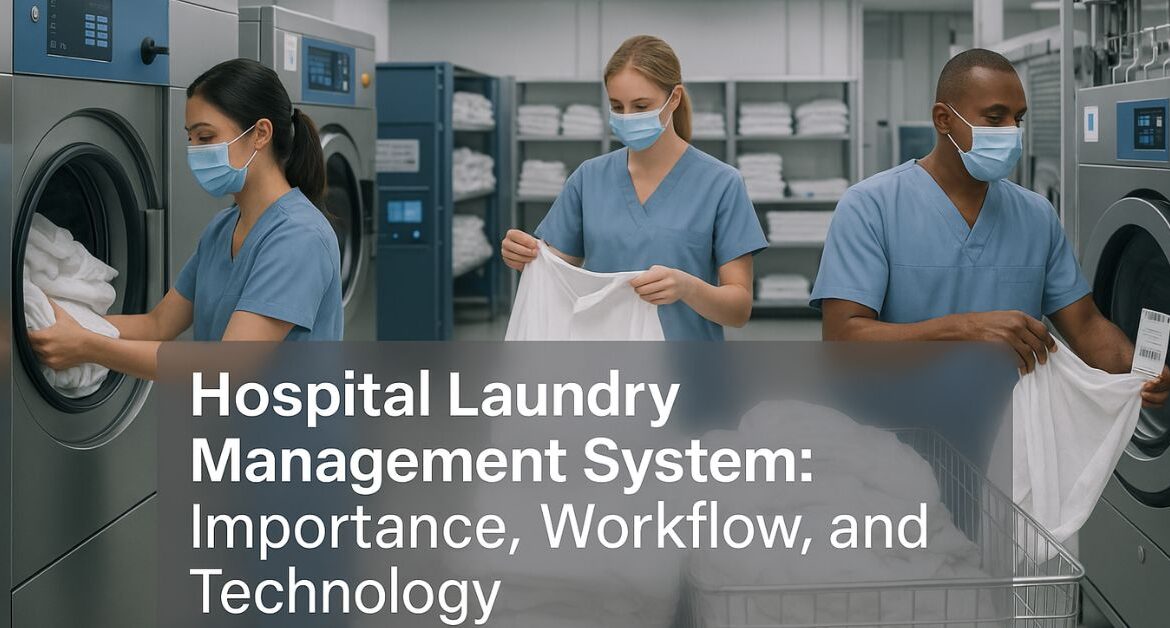
In a healthcare setting, cleanliness is not just about aesthetics; it’s a matter of life and death. Among the myriad of operations that contribute to patient safety, one critical and often overlooked aspect is hospital laundry management. Every day, thousands of linens, surgical drapes, patient gowns, and staff uniforms pass through hospital laundry systems, each with the potential to either safeguard or endanger patient health.
Hospital laundry management is a complex process that goes far beyond the simple tasks of washing and drying fabrics. It involves a delicate balance of infection control protocols, regulatory compliance, operational efficiency, and resource optimization. With healthcare-associated infections remaining a significant concern in patient care, the role of well-managed laundry systems has never been more critical.
Understanding the Critical Role of Hospital Laundry Management
Hospital laundry management serves as an invisible shield protecting patients, healthcare workers, and visitors from potential infection transmission. Unlike commercial or household laundry, medical facility linens come into direct contact with bodily fluids, infectious agents, and vulnerable patients with compromised immune systems. A single lapse in proper handling or processing can trigger infection outbreaks that affect multiple patients and strain healthcare resources.
The significance of professional laundry management in healthcare settings manifests through several key dimensions. First, it directly impacts patient safety by eliminating pathogens from reusable textiles. Second, it ensures regulatory compliance with standards set by organizations like NABH (National Accreditation Board for Hospitals & Healthcare Providers) and WHO (World Health Organization).
Medical textiles processed through hospital laundries include items with varying contamination levels. Heavily soiled surgical drapes used during invasive procedures require different handling protocols than routine bed linens. Patient gowns from isolation wards demand segregation and specialized treatment. Understanding these distinctions and implementing appropriate workflows forms the foundation of effective laundry management.
The Complete Hospital Laundry Workflow
A well-structured hospital laundry workflow follows a systematic progression from collection to distribution, with each stage designed to minimize contamination risks while maximizing efficiency. This workflow typically encompasses seven critical phases that transform contaminated textiles into sanitized, ready-to-use linens.
Collection and Sorting
The journey begins at the point of generation—patient rooms, operating theaters, emergency departments, and other clinical areas. Contaminated linens must be handled with extreme care to prevent pathogen transmission. Healthcare staff collect soiled textiles using color-coded bags that indicate contamination levels: red bags for heavily soiled items, yellow for infectious materials, and white or blue for routine laundry.
Key considerations during collection include:
- Minimal handling of contaminated linens to reduce airborne pathogen dispersal
- Never shaking or sorting soiled linens in patient care areas
- Immediate bagging at the point of use with bags filled only to three-quarters capacity
- Proper labeling with ward identification and contamination level
- Secure transport carts with leak-proof construction and regular sanitization
Sorting occurs in designated areas within the laundry facility, not in clinical zones. Staff equipped with appropriate personal protective equipment (PPE) categorize linens by fabric type, color, and required treatment intensity. This initial sorting determines subsequent processing parameters such as water temperature, detergent selection, and cycle duration.
Washing and Disinfection
The washing phase represents the most critical stage where chemical action, thermal energy, and mechanical force combine to eliminate pathogens and remove soil. Modern hospital laundry systems employ sophisticated washing machines with programmable controls that ensure consistent treatment according to textile type and contamination level.
Effective washing protocols incorporate:
- Pre-wash cycles to remove heavy soil and reduce microbial load
- Main wash temperatures between 71°C to 77°C for thermal disinfection
- Proper detergent-to-water ratios with pH-balanced formulations
- Adequate water levels ensuring complete textile submersion
- Rinse cycles that eliminate detergent residues and remaining pathogens
- Final acidic rinse to neutralize alkalinity and condition fabrics
For heat-sensitive textiles that cannot withstand high-temperature washing, chemical disinfection using appropriate antimicrobial agents provides an alternative. These processes must achieve equivalent pathogen reduction while preserving fabric integrity. Resources like LaundroMentor offer comprehensive guidance on implementing WHO-compliant washing protocols that balance infection control with textile preservation.
Drying and Finishing
Post-wash drying serves dual purposes: completing the disinfection process through heat application and preparing linens for immediate use. Industrial dryers in hospital laundries maintain temperatures sufficient to eliminate any surviving microorganisms while moisture meters ensure adequate drying that prevents mildew growth during storage.
Finishing processes vary by textile type. Flat linens like bed sheets pass through automated folders that create uniform, storage-ready bundles. Surgical drapes may require pressing to remove wrinkles that could harbor bacteria. Patient gowns undergo inspection for damage, with worn items diverted to disposal rather than returned to circulation.
Quality Control and Packaging
Quality assurance checkpoints throughout the workflow verify that processed linens meet hygiene standards and remain fit for purpose. Visual inspection identifies stains, tears, or fabric degradation. Microbiological sampling at regular intervals confirms disinfection effectiveness. Only textiles passing these quality gates proceed to packaging.
Packaging methods protect clean linens from recontamination during storage and transport. Heat-sealed plastic bags, covered carts with rigid lids, and shrink-wrapped bundles create barriers against environmental pathogens. Clear labeling indicates linen type, quantity, processing date, and intended destination, facilitating inventory management and traceability.
Technology Transforming Hospital Laundry Operations
- Digital transformation in hospital laundry
- Boosts efficiency, traceability, and compliance
- Fixes long-standing gaps in inventory control, workflow, and documentation
- Boosts efficiency, traceability, and compliance
- RFID-enabled linen tracking
- Heat-resistant chips survive hundreds of wash cycles
- Readers update status at each checkpoint (collection → wash → storage → ward delivery)
- Benefits
- Real-time inventory visibility
- Reduced linen loss and pilferage
- Optimized par levels and replenishment
- Automated billing for external laundry services
- Predictive replacement based on usage patterns
- Assured supply to high-demand departments
- Real-time inventory visibility
- Heat-resistant chips survive hundreds of wash cycles
- Automated washing systems (PLC-driven)
- Apply precise, fabric-specific wash formulas
- Control and monitor: water temperature, chemical dosing, cycle time, mechanical action
- Sensors detect imbalances/overheating/dosing errors and auto-adjust or alert operators
- Outcome: consistent quality, fewer rewash events, improved safety
- Apply precise, fabric-specific wash formulas
- Integrated laundry management software
- Centralizes scheduling by priority and machine availability
- Tracks textile lifecycle from purchase to disposal
- Generates audit-ready compliance reports
- Analyzes KPIs to surface improvement opportunities
- LaundroMentor supports end-to-end implementation aligned with NABH and WHO standards
- Centralizes scheduling by priority and machine availability
- Cloud dashboards & mobile apps
- Real-time operational visibility from any location
- Ward staff can request deliveries, report shortages, and track fulfillment
- Eliminates communication gaps and speeds turnaround
- Real-time operational visibility from any location
Infection Control: The Primary Objective
The cornerstone of hospital laundry management is the prevention of infections. Healthcare-associated infections (HAIs) affect millions of patients worldwide annually. In addition to lengthening the patient’s stay and increasing treatment costs, they are the cause of many deaths. Hospital linen is only one of the possible transmission media. On the other hand, its exclusion from the infection transmission process is a task well accomplished.
The key to preventing cross-contamination in hospital laundry facilities is a good understanding of microorganisms. Pathogens such as bacteria, viruses, or fungi on fabric have different lifespans depending on the environment. Some of them also have a form of dormancy, so-called spores, which are able to resist ordinary washing. In addition, the lack of clear separation of the area of dirty linen and the sorting and packaging area of clean linen and the lack of self-discipline and appropriate understanding of internal workflows in the laundry often cause a large risk of cross-contamination.
WHO recommendations for health care laundry define the minimum requirements that healthcare organizations must meet. These include, among other things, the physical separation of soiled and clean linen, a suitable ventilation system to avoid airborne transmission of pathogens, training of laundry workers in the principles of infection prevention, and periodic environmental monitoring to ensure the effectiveness of processes.
Facilities that work with particularly immunocompromised patients such as oncology, transplant, and neonatal intensive care units may have additional, higher requirements for laundry protocols. This can include double wash cycles, additional disinfection steps, terminal sterilization of certain items, and more frequent microbiological controls.
Regulatory Compliance and Accreditation Standards
Hospital accreditation bodies worldwide recognize laundry management as a critical operational component subject to specific standards and evaluation criteria. In India, NABH accreditation requires healthcare facilities to demonstrate systematic approaches to linen management that prevent infection transmission and ensure adequate supply availability.
NABH standards address multiple laundry management dimensions:
Facility Design and Infrastructure
- Separate areas for soiled linen sorting, washing, and clean linen storage
- Workflow patterns preventing cross-contamination between dirty and clean zones
- Adequate ventilation with negative pressure in soiled areas and positive pressure in clean zones
- Proper lighting, temperature control, and pest prevention measures
- Emergency backup systems for critical operations
Process Documentation and Control
- Written policies and procedures for all laundry operations
- Standard operating procedures specifying washing parameters for different textile types
- Quality control protocols with defined inspection criteria and sampling frequencies
- Maintenance schedules for equipment with documentation of servicing activities
- Incident reporting systems for process failures or contamination events
Staff Competency and Safety
- Training programs covering infection control, chemical handling, and equipment operation
- Personal protective equipment provision and usage monitoring
- Health surveillance for laundry workers with vaccination and screening programs
- Safety protocols for handling sharp objects potentially hidden in soiled linens
Resources like LaundroMentor provide healthcare facilities with expert guidance on achieving and maintaining NABH compliance. Their comprehensive consulting services help hospitals develop compliant processes, prepare documentation for audits, and implement continuous improvement practices that sustain high standards.
Who Benefits from Professional Laundry Management Systems
The impact of effective hospital laundry management extends across diverse healthcare settings, each with unique requirements but shared infection control imperatives.
Hospitals and Medical Centers
Large acute care hospitals process enormous linen volumes daily—often exceeding 10-15 kg per bed per day. These facilities benefit from industrial-scale laundry systems offering high throughput capacity, automated sorting and folding equipment, and sophisticated tracking technologies. Effective management ensures surgical suites never face drape shortages, patient wards maintain comfortable bedding supplies, and isolation areas receive properly disinfected textiles.
Nursing Homes and Long-term Care Facilities
Elderly residents in nursing homes require frequent linen changes due to incontinence issues and extended stays. These facilities benefit from laundry management systems emphasizing gentle fabric treatment that extends textile lifespan, efficient workflows managing high per-resident linen volumes, and infection control protocols protecting vulnerable populations with compromised immunity.
Diagnostic Centers and Laboratories
Laboratory coats, protective gowns, and patient draping materials used in diagnostic facilities require specialized cleaning that removes biological contaminants while preventing cross-contamination between specimens. Smaller volumes but higher contamination risks characterize these settings, making proper segregation and targeted disinfection protocols essential.
Medical Colleges and Research Institutions
Teaching hospitals and research facilities combine patient care with educational and investigational activities. Their laundry management must accommodate diverse needs—clinical textiles for patient care, protective equipment for research laboratories, uniforms for students and staff. These institutions benefit from flexible systems handling varied textile types with appropriate treatment protocols for each category.
Clinics and Outpatient Centers
Smaller clinical facilities often outsource laundry services but still require systems ensuring proper handling of patient gowns, examination drapes, and staff uniforms. Whether managed in-house or externally, these operations must maintain infection control standards proportionate to patient volumes and procedure types performed.
Cost Considerations and Operational Efficiency
Managing laundry costs effectively is a critical aspect of hospital administration, as it helps balance the provision of quality patient care with financial responsibility. Laundry services incur ongoing costs related to water and energy usage, chemical supplies, equipment maintenance, and labor. Optimizing these expenses without sacrificing safety or compliance with regulatory standards is key to successful laundry cost management in healthcare settings.
Effective textile inventory management is essential for avoiding both shortages that can impact patient care and excess stock that ties up financial resources. Hospitals can determine appropriate par levels by analyzing data on usage rates, laundry processing times, and loss factors, such as textile damage or shrinkage. This approach helps ensure that there is always an adequate supply of textiles on hand while avoiding overinvestment in inventory.
Investing in energy-efficient laundry equipment can help hospitals reduce operating costs and contribute to environmental sustainability efforts. High-efficiency washing machines that extract more water during the spin cycle can decrease drying time and energy consumption. Heat recovery technology captures waste heat from wastewater and exhaust air and uses it to preheat incoming water. LED lighting and variable-frequency drive motors can also significantly reduce energy use in laundry facilities.
Chemical optimization is another opportunity for cost savings while maintaining disinfection and cleaning standards. Automated chemical injection systems allow for precise dosing based on the size and soil level of each load, eliminating waste from overfilling or inaccurate measurements. Using concentrated chemical formulations can also lower costs by reducing packaging, storage, and transportation expenses.
Regular equipment maintenance can reduce downtime that can cause workflow disruptions and lead to costly emergency repairs. Scheduled preventive maintenance checks, parts replacements based on manufacturer guidelines, and staff training on proper equipment operation can prolong the useful life of laundry assets and ensure they continue to run reliably.
Sustainability in Hospital Laundry Operations
Environmentally friendly hospital laundering is becoming a core competency of healthcare facilities as they work to become environmentally sustainable. Hospital laundry requires water, energy and chemicals. It also produces wastewater and eventually has to deal with end-of-life textiles. Reducing water use can be accomplished by investing in more efficient washing machines that use 30-50% less water and recycling rinse water through a treatment process for use in the next wash load.
A practice as simple as making sure the washer is always full can also save water. Energy use can be reduced by replacing existing machines and dryers with more efficient equipment, washing the shortest amount of time that still produces a clean load, washing at the lowest possible temperature combined with chemical disinfection for heat sensitive items, and utilizing alternative energy sources where possible. Green chemistry reduces the use of chemicals that have negative impacts on the environment. Environmentally friendly detergents can be biodegradable, phosphate-free, or made into concentrated formulas that require less packaging and result in less transportation emissions.
Textile lifecycle management extends fabric usability through proper handling, rotation systems distributing wear evenly across inventory, prompt repair of minor damage, and eventual recycling or repurposing rather than landfill disposal.
Challenges and Solutions in Modern Hospital Laundry Management
Hospital laundry operations are not without their challenges, despite technological and procedural advancements:
- Recruitment and Retention: The broader issues of healthcare workforce shortages impact laundry operations as well. The physically demanding nature of the job, exposure to contaminants, and shift work make it challenging to attract and retain staff. Improving workplace safety, offering competitive wages, providing growth opportunities, and using automation to minimize physical labor can help.
- Inventory Management and Theft: Textile theft and loss can deplete inventory and increase replacement costs. Implementing RFID tracking systems provides visibility into inventory, deters theft, and allows for the recovery of lost items. Conducting regular audits of linen inventory can help identify loss patterns and develop targeted interventions.
- Equipment Breakdown: Equipment malfunctions can disrupt the laundry process and may lead to linen shortages, affecting patient care. Having excess capacity, preventive maintenance schedules, agreements with equipment suppliers for quick repairs, and emergency backup plans help maintain service during equipment failures.
- Infection Control Protocols: Changes in infection control guidelines may necessitate periodic review and adjustments to laundry processes. New pathogens with unique resistance profiles might require protocol updates. Keeping abreast of evolving standards through training, industry association involvement, and consulting with infection control experts ensures ongoing compliance and effectiveness.
Conclusion
Hospital laundry services are an integral aspect of infection prevention and control measures in healthcare settings. Handling and processing of soiled linens require specialized systems and processes, appropriate infrastructure, trained personnel, and a commitment to quality and compliance.
With the evolving landscape of healthcare delivery, laundry management faces challenges such as antimicrobial resistance, regulatory changes, sustainability concerns, and cost optimization. Technology plays a pivotal role in addressing these challenges by enabling automation, real-time tracking, data analysis, and process optimization.
Partnering with a consultant for setting up a world-class laundry operation, and implementation with ongoing support can help healthcare facilities design, implement, and maintain effective laundry management solutions. From new setups, expansion, upgrade of existing systems, to preparing for accreditation surveys, expert guidance ensures adherence to best practices and regulatory compliance while optimizing efficiency and resource allocation.
Frequently Asked Questions
Can hospital laundry be outsourced?
Yes, if vendors follow healthcare infection-control standards, WHO washing protocols, and maintain separate healthcare processing. Written agreements should outline performance and safety measures.
What temperature ensures effective disinfection?
WHO recommends washing at 71°C (160°F) for at least 3 minutes. For heat-sensitive fabrics, approved chemical disinfectants at 40–60°C can achieve equivalent results.
How are MDRO-contaminated linens handled?
Such linens are bagged immediately, color-coded, washed separately at disinfection temperatures, and handled with PPE. Standard laundry systems can safely process them.
What is laundry management’s role in accreditation?
Laundry operations are reviewed during accreditation for compliance, staff training, cleanliness, and documentation. Poor management can impact accreditation results.

Aman Sawaran is a leading laundry business consultant who has personally guided over a hundred laundromat owners to success. With years of hands-on experience in the laundry industry, Aman specializes in helping entrepreneurs build and scale profitable laundromats and pick-up & delivery laundry businesses. His step-by-step consulting program covers everything from selecting the ideal distributor and perfect location to securing financing and launching a state-of-the-art laundromat within just 3 to 6 months. Ready to transform your laundry business idea into a thriving venture? Aman can show you how to launch, scale, and maximize your profits with proven strategies and expert guidance.


